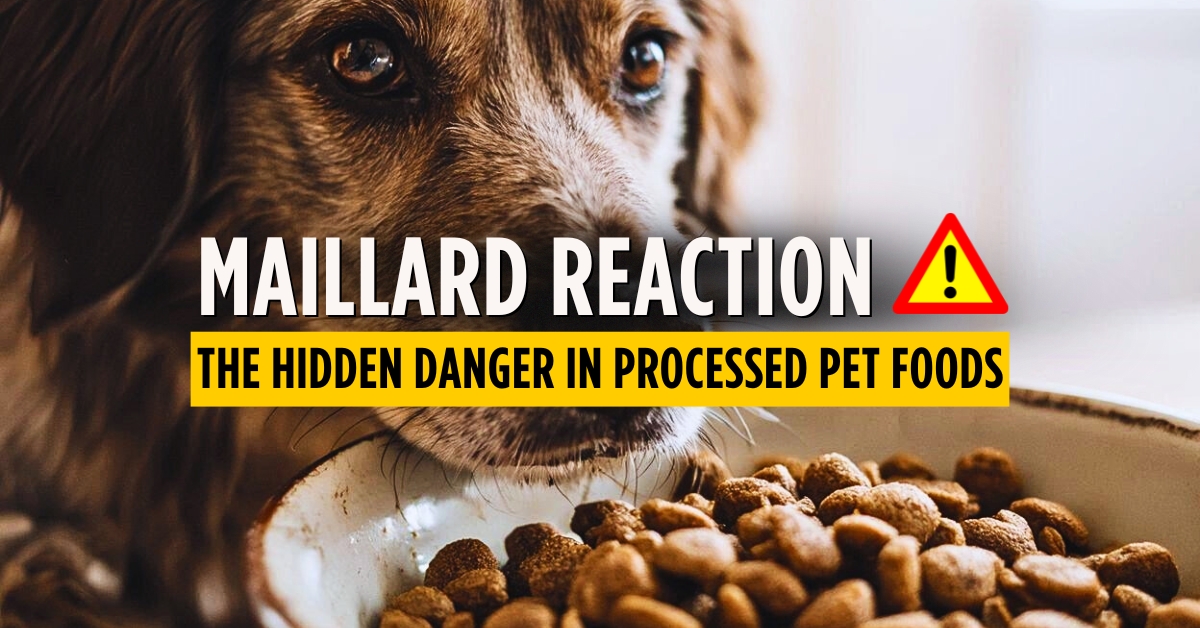
Imagine your dog’s ultra processed dry food or your cat’s crunchy biscuit turning a little brown and smelling “toasty” during manufacturing. That pleasant browning is the Maillard reaction — a chemical romance between sugars and amino acids triggered by heat. In human cooking it gives us browned bread, roasted coffee and caramelized onions. But inside processed pet foods, that same chemistry can quietly strip nutrients and create compounds that may harm your pet over time.
This article investigates: what the Maillard reaction actually does inside pet food, the measurable damage it causes (to nutrition and health), why nobody talks about it enough in India, and what clinical problems it may contribute to. I’ll quote studies and statistics so you can judge the risk — and ask the blunt questions your vet might not have time to raise.
What exactly is the Maillard reaction (MR) — explained simply
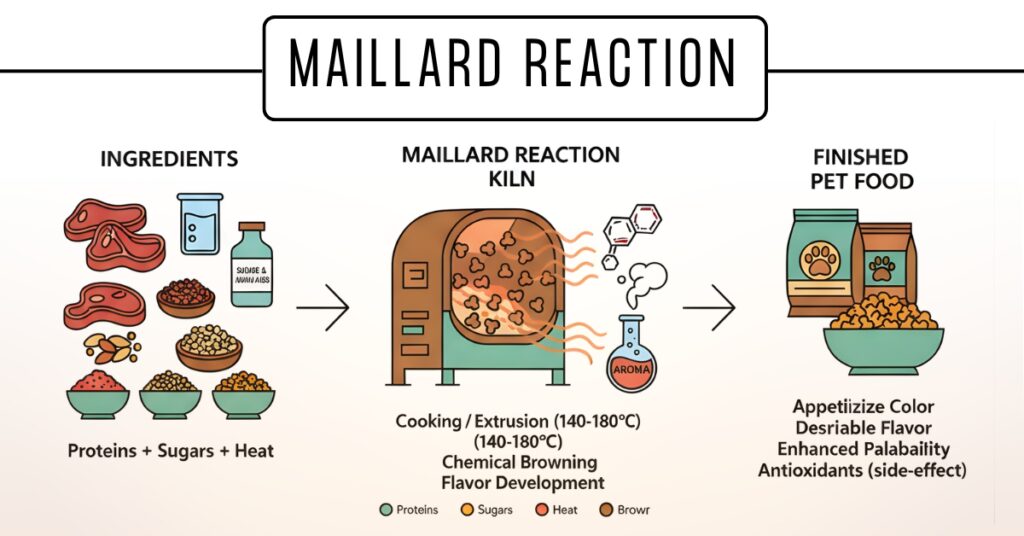
The Maillard reaction is a non-enzymatic chemical reaction between free reducing sugars (like glucose) and amino acids (the building blocks of proteins) that accelerates when food is heated. It progresses in stages:
- Early stage: amino acids (notably lysine) react with sugars to form Amadori products — these reduce the amount of usable amino acid in the food.
- Advanced stage: those early products evolve into advanced Maillard reaction products (MRPs) and advanced glycation end-products (AGEs). AGEs are chemically stable, often brown, and can be harmful when absorbed into the body.
In short: heat + sugar + protein = nutrient loss (especially lysine) + potentially harmful compounds (AGEs). (PubMed)
Why pet food production creates the perfect storm for MR
Commercial ultra processed dry foods , extruded treats and many canned foods use high heat, pressure and often carbohydrate binders. These are exactly the conditions that accelerate MR:
- Extrusion and baking at high temperatures for texture and shelf-stability.
- Use of carbohydrate-rich ingredients (cereals, starches) that supply sugars.
- Long shelf life — MR products can accumulate and persist.
The result: many processed pet foods contain pre-formed MRPs and AGEs before they ever reach your pet’s bowl. Scientists measuring commercial foods have found substantial levels of these compounds. (American Chemical Society Publications)
The immediate nutritional hit: lysine and ‘hidden’ deficiency
Lysine is an essential amino acid for dogs and cats — they cannot make it and must get it from food. The Maillard reaction binds lysine so it becomes unavailable (chemically modified) even though lab tests measuring “total lysine” may still show it’s present.
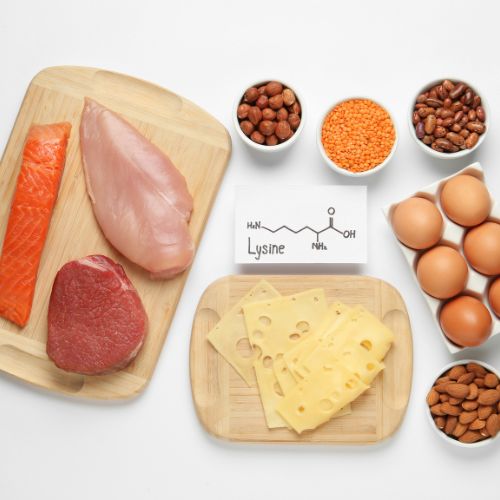
- A major review found that the difference between total lysine and reactive (usable) lysine in pet foods can be as high as 61.8% — meaning in extreme cases more than half the lysine measured in the food is biologically useless. That can put growing dogs or highly active animals at nutritional risk. (PubMed)
Ask yourself: is your “complete and balanced” bag actually supplying the usable nutrients it claims? If processing has locked up amino acids, the label can lie in practice.
the difference between total lysine and reactive (usable) lysine in pet foods can be as high as 61.8%
Beyond nutrition: AGEs and why they matter for health
AGEs formed by MR are not just “brown pigments.” They are biologically active molecules that, when absorbed, can:
- Increase oxidative stress (damaging cells).
- Trigger inflammation by interacting with receptors (RAGE).
- Accumulate in tissues (kidney, blood vessels, lens of the eye).
In humans, high dietary AGEs are linked to aging, diabetes complications, renal disease and cardiovascular problems. Veterinary studies show AGEs are absorbed by pets and can be detected in urine and plasma — and they are elevated in dogs with metabolic disease. This suggests dietary AGEs could contribute to the same chronic, low-grade inflammatory burden in companion animals. (PMC)
Hard numbers you should know — the evidence (statistic roll call)
Below are concrete, published figures pulled from veterinary and food-science literature:
- Up to 61.8% difference between total and reactive lysine measured in some pet foods — indicating major reductions in usable lysine after processing. (PubMed)
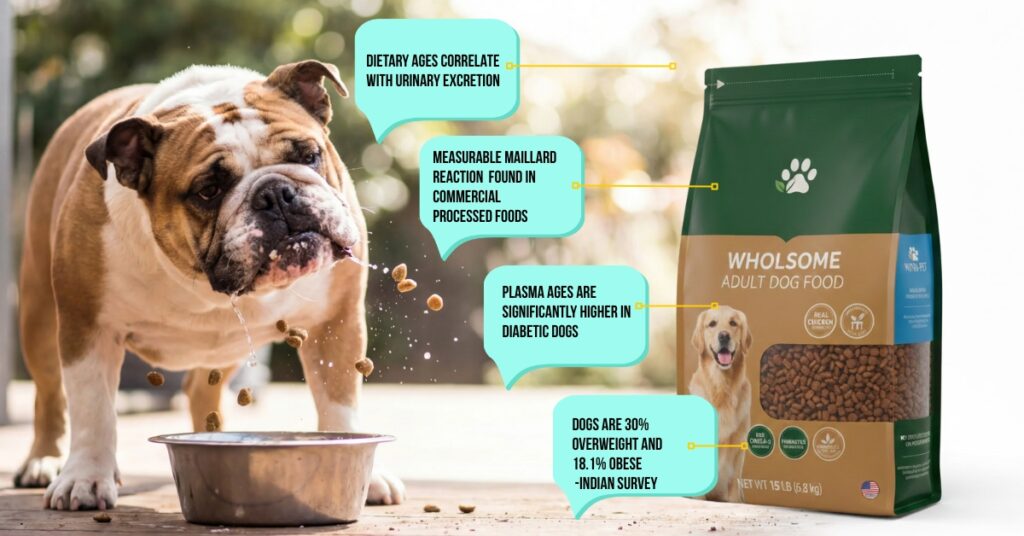
- Quantitative analyses have demonstrated measurable Maillard reaction products and AGEs in many commercially processed pet foods (multiple studies, including targeted analyses in peer-reviewed journals). (American Chemical Society Publications)
- In feeding trials and observational studies, dietary AGEs correlate with urinary excretion of AGE biomarkers in dogs and cats — showing absorption and bodily exposure from food. (PMC)
- Plasma AGEs are significantly higher in diabetic dogs compared with healthy controls (statistical significance reported in veterinary research). This mirrors human data that link AGEs with diabetes complications. (ScienceDirect)
- Indian surveys report 30% overweight and 18.1% obese in some clinic-based samples of dogs — obesity is a major risk factor for diabetes and metabolic inflammation, which AGEs can exacerbate. (Regional veterinary studies, Meena et al.). (CABI Digital Library)
- The Indian pet food market (retail value) reached about US$629.6 million in 2023 and is rapidly expanding — processed pet food adoption is accelerating in metropolitan India, increasing exposure to MRPs at scale. (agriculture.canada.ca)
These numbers show two things: processed commercial food is prevalent and it can carry biologically relevant levels of MRPs/AGEs — and our pets already carry high rates of obesity and metabolic disease that make them vulnerable. (agriculture.canada.ca)
Medical conditions plausibly linked to dietary MRPs/AGEs in pets
To be precise: causation is complex and still under investigation. But veterinary evidence and mechanistic biology point to plausible links:
- Worsened diabetes mellitus — AGEs accumulate in diabetic dogs and may worsen glucose metabolism and complications. (ScienceDirect)
- Chronic kidney disease (CKD) — AGEs accumulate in renal tissue and are associated with impaired renal function in humans; MRPs may increase renal workload and oxidative stress in pets. (Animal nutrition reviews warn about this possibility.) (PubMed)
- Accelerated aging and cataracts — AGEs are known to cross-link proteins in the lens, contributing to cataract formation; diabetic dogs already show earlier cataract development. (ScienceDirect)
- Inflammatory conditions and immune dysregulation — processed feed components (including MR products) can modulate immune responses and gut microbiota; chronic inflammation contributes to arthritis, dermatitis and metabolic disease. (Frontiers)
- Reduced growth or poor condition in puppies/kittens — loss of reactive lysine and other essential amino acids in growth formulas may impair development. (PubMed)
Critical question: If MRPs and AGEs can worsen or contribute to these conditions, why are they not a routine conversation during vaccination or wellness checks? Because MRPs sit at the intersection of nutrition science, manufacturing practices and long-term chronic disease — a space where nobody profits from alarm and where evidence still needs to be translated into clinical guidelines. (PubMed)
Why this topic is under-discussed — and who benefits from silence
Several practical and commercial reasons help explain the silence:
- Labels don’t report MRPs or “reactive lysine.” Pet food labels report crude nutrient numbers (total protein, amino acid totals) not bioavailability tests. A bag can claim adequate lysine even if much is chemically blocked. (PubMed)
- Manufacturing constraints. High heat extrusion and long shelf life are essential for affordability, texture and safety (pathogen kill). Reducing MR would require reformulation, capital investment and possibly higher cost. (research.wur.nl)
- Regulatory and knowledge gaps. Regulatory frameworks focus on contaminants, nutrient minimums and safety — not on MRPs/AGEs. The science is evolving; there is not yet an agreed-upon industry standard for acceptable AGE levels in pet food. (PubMed)
- Marketing and consumer awareness. Most pet parents equate crunchy ultra processed dry food with convenience and “complete” nutrition. The invisible chemistry behind processing doesn’t get attention until a pet develops disease years later. (agriculture.canada.ca)
Put bluntly: short-term convenience and cost benefits mask an invisible, long-term chemical exposure problem.
Practical signs and red flags for pet parents
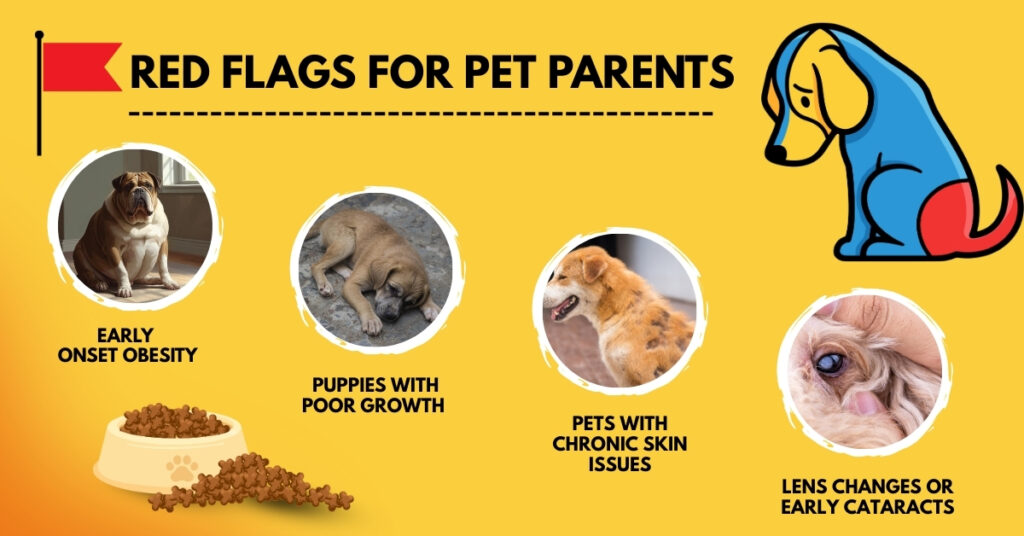
You don’t need to be a lab scientist to act. Watch for:
- Early onset obesity, unexplained weight gain or metabolic signs (increasing thirst, urination, lethargy). These are risk factors for diabetes and inflammation. (PMC)
- Puppies with poor growth despite calorie intake — could be amino acid bioavailability issues. (PubMed)
- Pets with chronic skin issues, arthritis or recurring infections — these can have an inflammatory basis where dietary AGEs may be a contributing factor. (Frontiers)
- Lens changes or early cataracts, especially in diabetic animals — an indicator of systemic glycation. (ScienceDirect)
If you notice these, ask your vet about diet history and consider whether processed, high-heat foods dominate your pet’s feed.
What pet owners can do right now — an actionable checklist
This is a pragmatic, low-hype guide that balances feasibility and risk reduction for Indian pet households.
- Reduce reliance on heavily processed ultra processed dry food as the only diet. Rotate in minimally processed, properly balanced fresh or gently cooked options where possible. If you switch, do so under vet or nutritionist guidance. (PubMed)
- Prefer diets with careful processing claims. Some brands specify low-temperature drying, cold-pressed, freeze-dried or gently cooked processes that reduce MR formation. Look for such processing descriptions. (American Chemical Society Publications)
- Check ingredient lists for sugar/starch load. High levels of cereal, maize or other starches supply sugars that fuel MR. Lower carbohydrate formulas reduce the raw material for MR. (PubMed)
- Support growth formulas in puppies with a vet-approved plan. Puppies need usable amino acids; ask whether the brand tests reactive lysine or has third-party digestibility data. (PubMed)
- Ask your vet for screenings if your pet is overweight, drinking more, or showing early signs of metabolic disease — early detection is critical. (PMC)
- Consider reducing treats/extruded chews and replace with low-heat or fresh options to cut cumulative AGE load. (American Chemical Society Publications)
What vets and manufacturers should be asked — tough questions
As an investigating pet parent, demand clarity:
- “Do you test for reactive lysine or just total lysine?” (Reactive lysine is the useful metric.) (PubMed)
- “What processing temperatures and times are used, and do you monitor AGE levels in finished product?” (American Chemical Society Publications)
- “Is there data on long-term health outcomes in animals fed this diet?” (If not — why not?) (PubMed)
If the answers are evasive, treat that as a red flag — transparency matters for long-term health.
The state of the science — how much is settled, how much remains open
- Settled: MR occurs during pet food processing and reduces reactive lysine; AGEs exist in processed pet foods and are absorbed. There are measurable biomarkers in pet urine and plasma. (PubMed)
- Under investigation: Direct causal chains from lifetime dietary AGE exposure to specific chronic diseases in pets (exact doses, timelines). More longitudinal clinical work is needed to prove causation rather than association. (PubMed)
So the evidence justifies concern — and precautionary changes — even while definitive long-term trials are being done.
India context — why this matters locally
India’s pet market is growing fast — retail pet food sales expanded rapidly between 2018 and 2023. That means more pets in cities are eating processed food daily, increasing cumulative exposure to MRPs/AGEs. At the same time, clinic-based studies in India already report high rates of overweight/obesity and rising incidence of canine diabetes and related disorders. Those parallel trends make this a public-health-style issue for companion animals in Indian cities. (agriculture.canada.ca)

Final warning
We are feeding millions of pets convenience products engineered for shelf life, taste and cost — not necessarily for long-term anti-inflammatory health. The Maillard reaction quietly erodes essential nutrition and deposits AGEs into bodies over years. For overweight or metabolically fragile pets — already at increasing risk in Indian metros — that hidden chemical load may be the difference between healthy ageing and chronic disease.
Ask the loud, inconvenient question: Would you trade your pet’s long-term health for convenience? If your answer is “no,” start by reading labels, questioning processing claims, and having a frank diet conversation with your vet.
FAQ — common questions Indian pet parents ask
Q1: Can MRPs/AGEs be removed or reversed in my pet once ingested?
AGEs that are already formed and accumulated in tissues are difficult to remove; some are excreted, some are bound in tissues. Reducing future dietary exposure and managing metabolic disease are the main strategies. Urinary AGE markers fall when dietary AGEs fall, but tissue clearance is slow. (PMC)
Q2: Is raw feeding the answer to avoid MR?
Raw and gently cooked diets have much lower MRPs because they avoid high-temperature extrusion. However, raw feeding has other risks (pathogens, nutritional imbalance). Any diet change should be supervised by a qualified veterinarian or canine nutritionist to ensure safety and complete nutrition. (PubMed)
Q3: My bag says ‘complete and balanced’. Can it still be high in AGEs?
Yes. “Complete and balanced” usually refers to nutrient totals, not nutrient bioavailability or AGE content. Reactive lysine and AGE testing are not mandatory on labels, so a complete label can hide reduced usable nutrients. (PubMed)

Q4: Which pets are most at risk?
Puppies/kittens (growth requires usable amino acids), overweight or older pets, and animals with existing metabolic disease (pre-diabetes, CKD) are most vulnerable to the combined effects of nutrient loss and AGE-driven inflammation. (PubMed)
Q5: What practical first step should I take this week?
Do a diet audit: check how much of your pet’s daily calories come from highly processed extruded ultra processed dry food and treats. Discuss gradual diet changes and metabolic screening with your vet — and consider brands that describe low-heat processing, cold-pressed or freeze-dried options. (American Chemical Society Publications)
Q6: Are there any regulations or standards about MRPs/AGEs in pet food?
Not yet universally. Research reviews recommend industry monitoring and ingredient/processing changes to limit MR formation, but global regulatory standards on acceptable AGE levels in pet food are not well established. Advocate for transparency from manufacturers. (PubMed)