
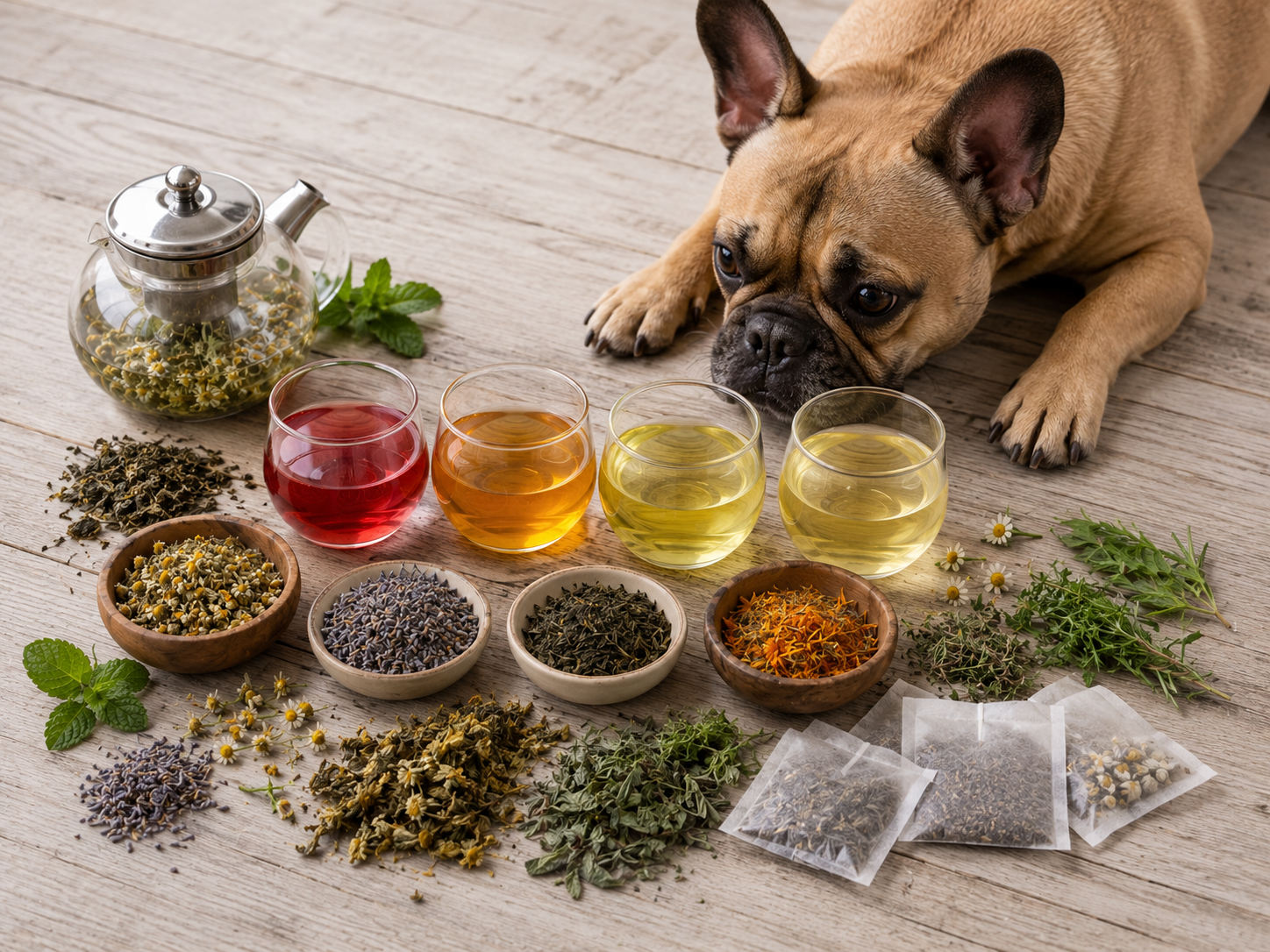
As pet parents in India, we are deeply connected to the power of traditional herbalism. From a soothing cup of ginger chai for a rainy-day cold to turmeric milk for healing, natural remedies are central to our households. But did you know that this ancient wisdom can also extend to our four-legged family members?
Amidst the scorching Indian summers and the high-humidity monsoon seasons, our dogs often battle unique health challenges. They experience skin allergies, digestive issues from lifestyle changes, and anxiety caused by loud festive crackers. While commercial supplements are readily available, a growing community of Indian pet owners is turning back to nature.
Enter herbal teas—a gentle, effective, and completely natural way to support your dog’s wellness. When sourced correctly and brewed with care, specific herbal infusions can work wonders for your dog’s vitality.
Here is a look at the safest, most beneficial herbal teas for your dog, and how you can source them sustainably within India.
🌿 Types of Botanical Tea Forms Available in India (Natural & Ayurvedic)

When exploring herbalism for your dog, it helps to understand which part of the plant you are using. In India, both Western herbs and traditional Ayurvedic botanicals are easily available at local Ayurvedic Jadi-Buti shops (Pansari stores), organic markets, and online wellness platforms.
Here is a breakdown of the specific plant parts used for canine-safe infusions, along with their English, common, and Ayurvedic names:
Leaves & Flowers (Soft Botanicals)
These are delicate plant parts that are rich in aromatic oils and antioxidants. They should be steeped gently in hot water rather than boiled heavily.
- Chamomile Flowers (Babuna / Babunah): Prized for calming the nervous system, reducing festive anxiety, and soothing minor skin irritations.
- Rooibos Leaves (Red Bush): Though native to South Africa, organic loose leaves are widely imported to India. Excellent as a natural antihistamine for seasonal scratching.
- Peppermint Leaves (Pudina): Readily available fresh or dried across India. Used in very small quantities to cool down stomach inflammation and freshen bad breath.
- Tulsi / Holy Basil Leaves (Tulsi): The ultimate Ayurvedic immunity booster. Plain green Tulsi (Rama or Krishna Tulsi) possesses potent antibacterial and antiviral properties that support respiratory health during monsoon seasonal changes.
Roots & Rhizomes (Earth Botanicals)
Roots grow underground and store highly concentrated medicinal compounds. They are tough, so they often require a light boil (decoction) to extract their full benefits.
- Ginger Root (Adrak / Shunti): A staple in Indian kitchens. Highly effective at blocking nausea, easing car sickness, and stimulating a low appetite.
- Turmeric Root (Haldi / Haridra): The dried root or fresh rhizome contains curcumin. This serves as the benchmark natural anti-inflammatory for arthritis and joint stiffness.
- Ashwagandha Root (Indian Ginseng): A foundational Ayurvedic adaptogen. In very small, vet-approved doses, a weak infusion made from pure Ashwagandha root powder helps senior dogs adapt to chronic physical and mental stress.
Bark & Stems (Structural Botanicals)
Barks and stems contain thick woody fibers packed with protective tannins and healing compounds.
- Ceylon Cinnamon Bark (Dalchini): Ensure you source true Ceylon cinnamon rather than the common Cassia bark (which contains high levels of coumarin, a compound tough on a dog’s liver). A very weak infusion helps regulate blood sugar and offers mild joint relief.
- Giloy Stems (Guduchi / Amrita): Widely available across India as dried woody stems or juice. In Ayurveda, Giloy is famous for boosting platelet counts and strengthening the immune system. A highly diluted, weak wash or splash can help recovery from seasonal tick fever.
1. Rooibos Tea: The Ultimate Shield Against Skin Allergies and Hot Spots

Indian summers and monsoons bring a common enemy for dog parents: severe skin allergies, dampness-induced dermatitis, and painful hot spots. Rooibos tea (often called red bush tea) is a powerhouse solution for these exact issues.
- The Benefits: Rooibos is naturally 100% caffeine-free and loaded with potent antioxidants like aspalathin and nothofagin. It acts as a natural antihistamine, reducing the intense itching and redness associated with environmental allergies.
- How to Use: You can add a cooled, diluted splash directly to their water bowl. Alternatively, use brewed and cooled rooibos tea as a topical rinse. Pour it over your dog’s paws and belly after a walk to soothe irritated skin and prevent yeast infections.
2. Chamomile Tea: Calming Festive Anxiety and Soothing Sensitive Tummies
From the booming firecrackers of Diwali to the loud drums of local festivals, anxiety is a major hurdle for Indian pets. Furthermore, stress often manifests as digestive distress in dogs. Chamomile is the perfect gentle sedative to bring peace back to your home.

- The Benefits: Chamomile contains apigenin, a compound that binds to brain receptors to promote muscle relaxation and reduce anxiety. It also possesses anti-spasmodic properties, meaning it relaxes the muscles of the stomach and intestines to ease bloating and gas.
- How to Use: Brew a very weak cup of chamomile tea, let it cool completely, and mix a few tablespoons into their evening meal during high-stress days.
3. Ginger Tea: The Ancient Remedy for Travel Sickness and Monsoon Nausea
Whether you are taking your dog on a road trip to the hills or dealing with a sudden bout of monsoon-related stomach bugs, nausea can make your dog miserable. Ginger is a time-tested root that addresses gastric distress rapidly.

- The Benefits: Gingerols, the active components in ginger, stimulate digestive enzymes and accelerate gastric emptying. This significantly reduces motion sickness, acid reflux, and general lethargy caused by an upset stomach.
- How to Use: Steep a two-inch slice of fresh, organic ginger root in hot water for 5 minutes. Remove the ginger, let the water cool completely, and offer a small amount before a car ride.
4. Turmeric Tea: Golden Joint and Immunity Support for Aging Canines
Turmeric (Haldi) is the crown jewel of Indian herbalism. For senior dogs battling arthritis or large breeds prone to hip dysplasia during cold, damp winters, a targeted turmeric infusion can offer immense relief.

- The Benefits: The active ingredient, curcumin, is a phenomenal natural anti-inflammatory agent. It helps reduce joint swelling, improves mobility, and strengthens the immune system to fight off seasonal viral infections.
- How to Use: Boil organic turmeric powder or fresh root with water. Because curcumin requires a healthy fat to be absorbed by a dog’s body, always stir a tiny drop of pure cold-pressed coconut oil or native desi cow ghee into the cooled tea before serving.
5. Sourcing Herbs Safely in India: The Purity Checklist
The golden rule of veterinary herbalism is simple: what is safe for humans is only safe for dogs if it is completely pure. The Indian market is filled with adulterated tea blends, so sourcing requires a strict approach.
- Avoid Pre-packaged Blends: Never buy standard commercial “Relaxation” or “Detox” tea bags. These almost always contain hidden ingredients like black tea base, artificial flavorings, or xylitol (an artificial sweetener that is highly toxic to dogs).
- Look for Single-Ingredient Organics: Buy certified organic, single-herb loose leaves or powders. Brands that source directly from organic farms in the Western Ghats, Assam, or the Himalayan foothills are excellent choices.
- Check the Caffeine Label: Ensure that any herbal tea you purchase explicitly states it is naturally caffeine-free.
Which Tea and Coffee are Unsafe for Dogs? (The Danger Zone)
As rules of thumb go, any beverage containing caffeine is strictly off-limits and highly toxic to dogs. Canines cannot metabolise caffeine the way humans do, making them incredibly sensitive to its stimulant effects.

- Unsafe Teas: This includes standard Black Tea, Green Tea, Oolong Tea, White Tea, Matcha, and Earl Grey. Even “decaffeinated” versions of these human teas should be avoided, as they still contain trace amounts of residual caffeine.
- Unsafe Coffee: All forms of coffee—including instant coffee powder, coffee beans, brewed filter coffee, and espresso—are highly dangerous.
- The Real Danger: While a few casual laps of spilled tea might only cause mild jitters, chewing on discarded tea bags, loose tea leaves, or dry coffee grounds can be fatal. This delivers a massive, concentrated dose of caffeine that triggers caffeine poisoning.
- Toxicity Symptoms: Watch out for severe restlessness, hyperactivity, vomiting, diarrhoea, muscle tremors, panting, high blood pressure, and abnormal heart rhythms. If you suspect your dog ate coffee grounds or a tea bag, rush them to an emergency vet clinic immediately.
How to Prepare and Serve Tea for Dogs
Brewing tea for your pup requires a very different approach than making your morning cuppa. Throw out the milk, sugar, and heavy spices.
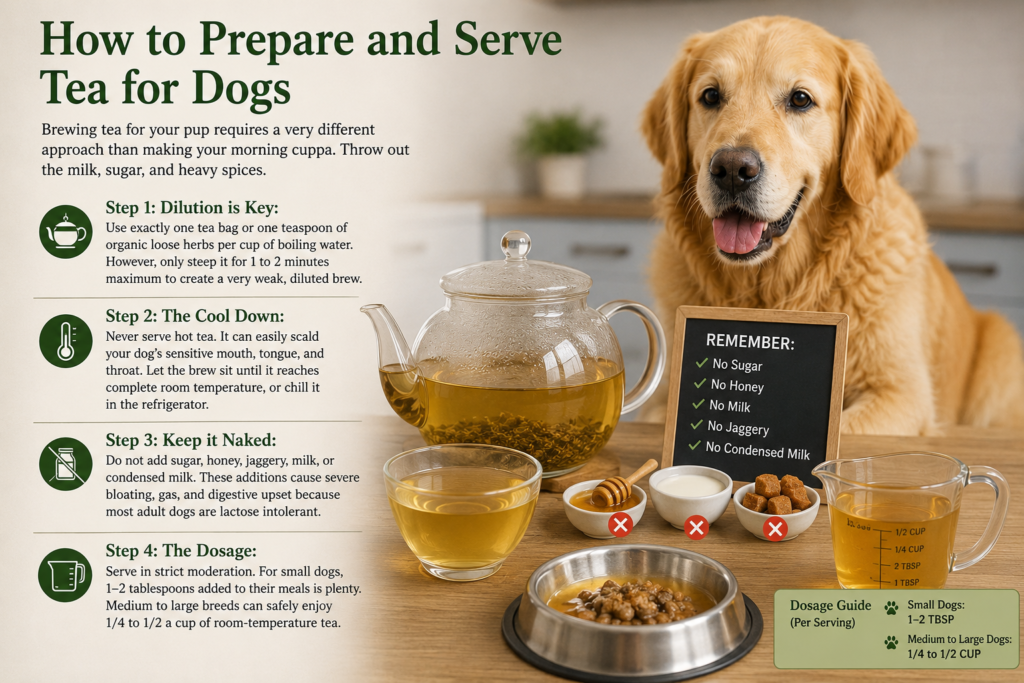
- Step 1: Dilution is Key: Use exactly one tea bag or one teaspoon of organic loose herbs per cup of boiling water. However, only steep it for 1 to 2 minutes maximum to create a very weak, diluted brew.
- Step 2: The Cool Down: Never serve hot tea. It can easily scald your dog’s sensitive mouth, tongue, and throat. Let the brew sit until it reaches complete room temperature, or chill it in the refrigerator.
- Step 3: Keep it Naked: Do not add sugar, honey, jaggery, milk, or condensed milk. These additions cause severe bloating, gas, and digestive upset because most adult dogs are lactose intolerant.
- Step 4: The Dosage: Serve in strict moderation. For small dogs, 1–2 tablespoons added to their meals is plenty. Medium to large breeds can safely enjoy 1/4 to 1/2 a cup of room-temperature tea.
Do Dogs Easily Accept Tea? (How to Introduce It)
Most dogs will not immediately lap up a bowl of plain herbal tea because it smells unfamiliar and lacks the meaty aromas they love. Introducing it requires a patient, step-by-step strategy.
- Start with the Water Bowl: Pour just one tablespoon of cooled, weak tea into their primary fresh water bowl. The high dilution ensures they barely taste it but get used to the subtle herbal scent.
- Mix it with Food (The Best Method): Pour the cooled tea directly over their dry kibble or mix it thoroughly into home-cooked meals (like boiled chicken and rice). The gravy masks the herbal taste perfectly.
- Make Healthy “Ice Golas”: During peak Indian summers, freeze weak, canine-safe herbal tea into ice cube trays. Throwing a chamomile or rooibos ice cube onto the floor makes for a fun, hydrating, and cooling game.
Never Force It: If your dog sniffs the tea and walks away, do not force them to drink it. Respect their preference and try a different safe herb a few weeks later.
Are You Dealing with Any Current Medical Issues? (Targeted Herbal Remedies)
If your dog is experiencing specific ongoing health conditions, herbal teas can act as a gentle, supportive therapy alongside your vet’s primary treatment plan. Here is how to match the right herbal infusion to your dog’s specific medical struggles:
Low Appetite and Sluggish Digestion
- The Issue: Indian summers can make dogs extremely lethargic, leading to a sudden drop in appetite. Changes in commercial food or minor stomach bugs can also cause them to refuse meals.
- The Herbal Solution: Ginger or Peppermint tea. Ginger stimulates the production of digestive enzymes and increases stomach motility. Peppermint relaxes gastric muscles, reducing bile flow and easing nausea.
- How it helps: Adding a few tablespoons of cooled ginger tea directly into their food bowl can kickstart their appetite and make their food smell more inviting.
Arthritis, Joint Pain, and Age-Related Stiffness
- The Issue: Large breeds (like Golden Retrievers and Labradors) and senior dogs often suffer from severe joint stiffness and arthritis, which worsens during the damp monsoon and chilly winter months in India.
- The Herbal Solution: Turmeric tea. The active compound, curcumin, is a phenomenal natural anti-inflammatory agent that works similarly to low-dose pain medications by blocking inflammatory pathways.
- How it helps: Regular intake helps reduce joint swelling, improves flexibility, and makes daily walks much more comfortable for aging pets.
Seasonal Scratching, Red Skin, and Environmental Allergies
- The Issue: High humidity during the monsoon season causes a massive spike in environmental allergens, pollen, and dust mites. This leads to non-stop scratching, paw licking, and red, inflamed bellies.
- The Herbal Solution: Rooibos tea. Because it acts as a completely natural, caffeine-free antihistamine, it actively lowers the body’s allergic response.
- How it helps: Giving it internally boosts skin immunity from within, while using it as a cool topical spray instantly halts the maddening itch on their paws and underbelly.
When Do You See Benefits? (Internal vs. External)
Herbalism is a slow, steady form of holistic healing. It is not an overnight cure like conventional pharmaceutical medication, but its long-term benefits are sustainable.
- Internal Benefits (Gut & Anxiety): You will see these relatively quickly. For instance, ginger tea can settle an upset stomach or motion sickness within 30 to 60 minutes of ingestion. For anxiety, a weak bowl of chamomile tea can help calm a stressed dog within 1 to 2 hours before a thunderstorm or Diwali fireworks.
- External Benefits (Skin & Coat): Structural improvements to chronic issues take longer. If you are giving your dog rooibos or turmeric tea to combat seasonal skin allergies, dandruff, or joint inflammation, you will need to be consistent. Noticeable changes—like a shinier coat, reduced scratching, and healed skin—typically manifest after 3 to 4 weeks of daily, disciplined use.

From Where to Source Dog-Safe Tea in India
Sourcing pure herbs in India requires vetting your vendors carefully to avoid heavy metals, chemical pesticides, and artificial fillers.
- Organic Human Brands: You don’t necessarily need a product labelled for pets if the ingredient list is entirely pure. Look for premium Indian wellness brands like Organic India, The Tea Shelf, or Vahdam Teas. Buy their certified organic, single-ingredient loose-leaf selections (like pure Chamomile flowers or plain Rooibos).
- Specialised Pet Brands: For ultimate peace of mind, choose Indian pet care brands that create pre-formulated, pet-safe botanical blends. Options like Jolly Good Pets Herbal Teas are excellent because they are completely blended by experts to be zero-caffeine and ready for canine consumption.
- Local Ayurvedic Stores: Traditional Khadi stores or trusted local Ayurvedic Jadi-Buti shops sell raw, dried herbs. Ensure you buy them whole (like whole dried ginger or chamomile heads) rather than powdered blends that could hide cheaper additives.
How to Use Tea Bags Topically for Hot Spots
Hot spots (acute moist dermatitis) are weeping, red, and incredibly itchy skin infections common during humid Indian monsoons. You can use the physical tea bags themselves as an external healing compress.
[Brew Tea Bag] ➔ [Chill in Fridge] ➔ [Press on Hot Spot] ➔ [Air Dry & Monitor]
- Step 1: Steep a single bag of pure Chamomile or Rooibos tea in hot water for 3 minutes. Both herbs are naturally packed with anti-inflammatory and mild antibacterial properties.
- Step 2: Remove the tea bag from the water. Do not squeeze out all the liquid. Place the wet tea bag on a clean plate and slide it into your refrigerator for 15–20 minutes until it is thoroughly chilled.
- Step 3: Gently hold the cold, damp tea bag directly onto your dog’s angry hot spot for 5 to 10 minutes. The cold temperature instantly numbs the fiery itch, while the plant’s natural tannins dry out the weeping wound and accelerate skin healing.
- Step 4: Let the area air-dry completely. Repeat this safe, soothing process 2 to 3 times a day until the redness fades.

Questions & Answers
Q: Can I give my dog regular milk tea (Chai) if it’s cooled down?
A: Absolutely not. Regular Indian chai contains black or green tea leaves, which are packed with caffeine. Caffeine causes rapid heart rates, tremors, and seizures in dogs. Additionally, cows’ milk can cause severe diarrhoea in lactose-intolerant canines.
Q: How much herbal tea can I safely give my dog daily?
A: Moderation is vital. For small dogs (under 10 kg), 1 to 2 tablespoons of weak, cooled tea mixed into food or water is plenty. For larger breeds, you can scale up to 1/4 of a cup. Always start with a few drops to check for any rare allergic reactions.
Q: Is it safe to use these herbal teas if my dog is on veterinary medication?
A: Herbs contain active medicinal compounds that can interact with conventional drugs. For instance, ginger can thin the blood, which might interact with certain heart medications. If your dog is on any long-term prescription, always consult your holistic vet before introducing herbal teas.
About The Author