Every day, millions of pet parents reach into a bag, scoop out a portion of dry kibble, and pour it into their dog’s bowl. We do this with an underlying assumption of safety, trusting that commercial pet food is highly regulated, rigorously tested, and perfectly optimized for our canine companions’ long-term health. However, as the pet wellness space evolves and analytical testing becomes more advanced, a rational, science-backed examination of commercial pet food is prompting a paradigm shift in how we view the modern canine diet.
Recently, the Clean Label Project (CLP)—a US non-profit focused on health and transparency in consumer product labeling—released an eye-opening study examining the hidden contaminants in dog food. The findings have sparked vital conversations across the pet care community.
Download Study: Click here
Before diving into the data, it is crucial to establish the purpose of this analysis. The goal is not to induce panic, shame pet owners, or point fingers. Feeding our pets is a balance of nutrition, budget, and convenience. Instead, the objective is to empower you with objective, scientific knowledge so you can make informed, deliberate choices for your dog’s natural wellness.
Here is a comprehensive breakdown of the Clean Label Project’s findings on heavy metals and toxins in dog food, what it means for canine biology, and the actionable steps you can take today.
The Study: What Exactly Was Found in the Bowl?
The Clean Label Project set out to analyze the true chemical composition of modern dog food, looking beyond the guaranteed analysis of protein, fat, and fiber on the back of the bag. The organization tested popular dry, air-dried, freeze-dried, and fresh/frozen dog foods. To provide a baseline of safety and context, they benchmarked these results against data from over 3,000 human food samples.
The analytical data revealed a stark contrast between commercial dry diets and fresh or minimally processed diets. Dry dog foods, in particular, consistently demonstrated alarmingly high levels of environmental toxins and industrial contaminants.
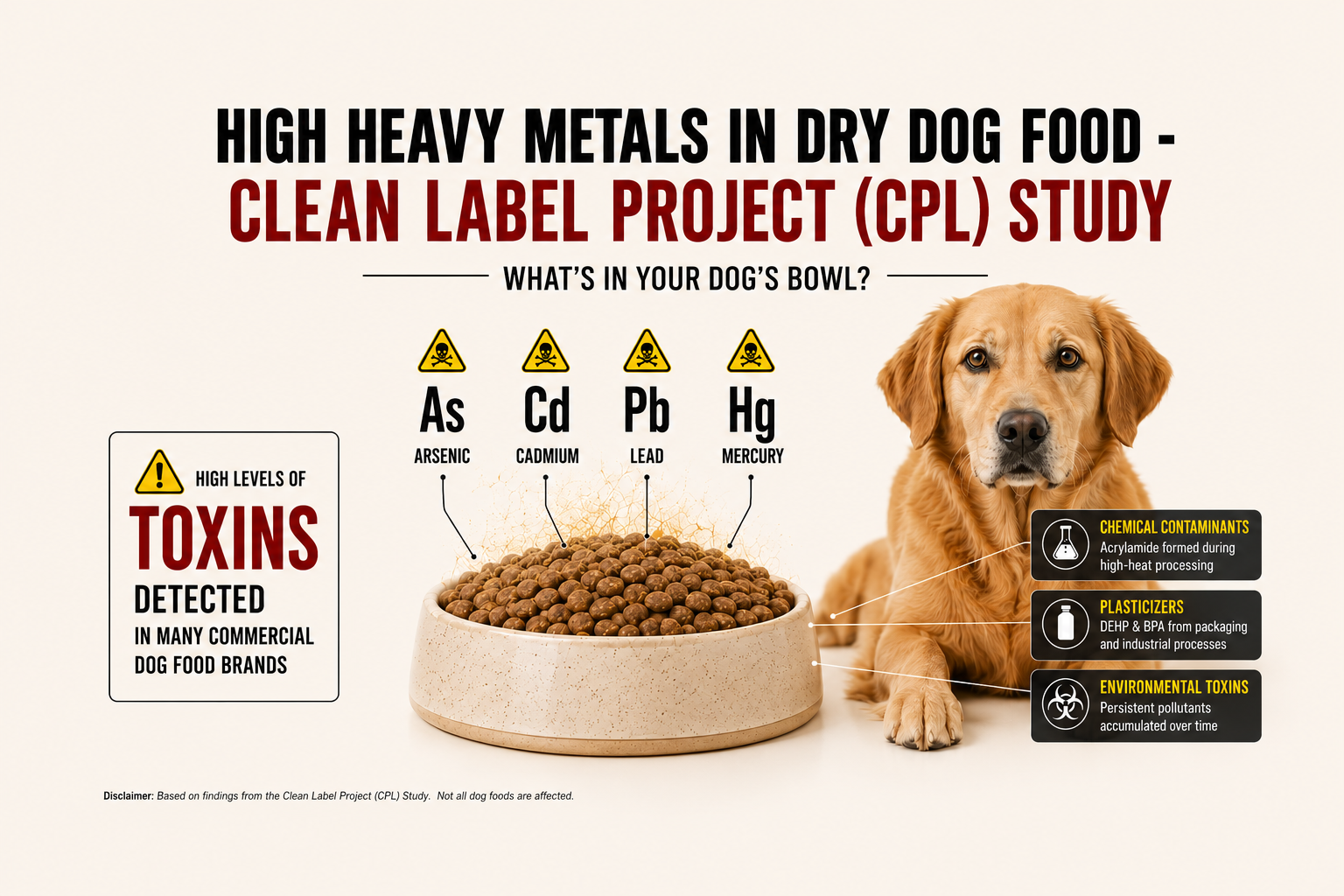
The primary culprits identified in the study fall into three major categories:
- Heavy Metals: The tests found significant trace levels of Arsenic, Cadmium, Lead, and Mercury. These elements are naturally occurring but become hazardous when concentrated.
- Chemical Contaminants: The study highlighted the prevalent presence of Acrylamide, a chemical compound not added intentionally, but formed as a byproduct of specific manufacturing techniques.
- Plasticizers: Traces of DEHP and BPA—chemical plasticizers associated with packaging and industrial processing—were found leaching into the food itself.
When compared directly, the data showed that dry dog food contained over 21 times more lead and nearly 12 times more arsenic than fresh and frozen dog food options.
How Do Toxins Get Into Dog Food?
A common misconception is that pet food manufacturers are cutting corners by intentionally adding these hazardous elements to their formulas. This is not the case. The presence of heavy metals and toxins is largely a byproduct of the modern agricultural supply chain, global ingredient sourcing, and high-heat industrial processing.
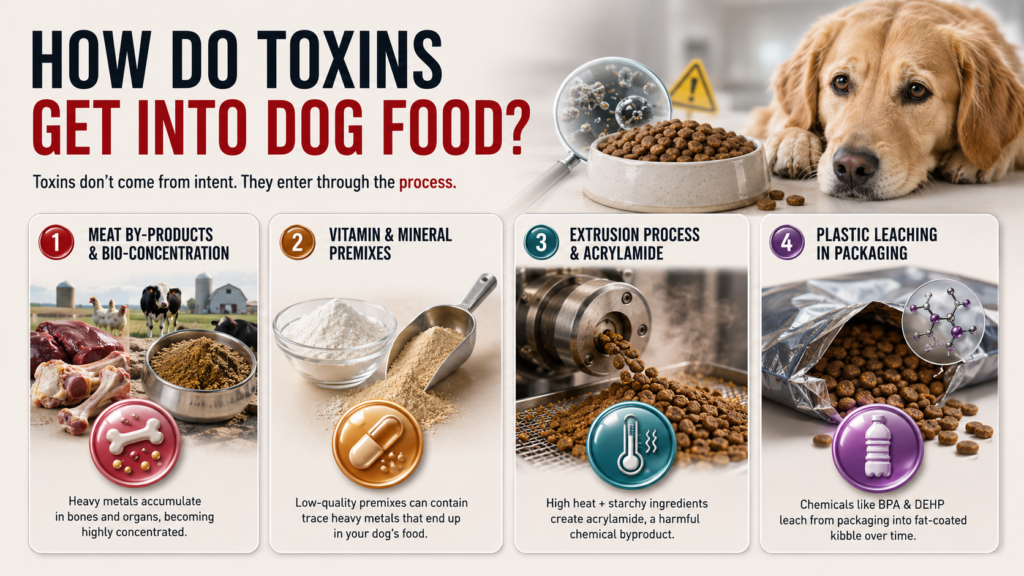
1. Meat By-Products and Bio-Concentration To understand how heavy metals enter kibble, we must look at the agricultural chain. Farm animals (like chickens, cows, and pigs) are exposed to trace amounts of heavy metals through soil, ground water, and commercial feed. As these animals grow, their bodies filter and store these metals. Biologically, heavy metals naturally concentrate in skeletal structures (bones) and filtering organs, particularly the liver, kidneys, and spleen.
When a commercial pet food label lists “Meat By-Products” or “Meat and Bone Meal,” it generally refers to the highly condensed, rendered versions of these exact parts—the carcasses, bones, and organs left over after the primary muscle meat has been harvested for the human food chain. Because the moisture is entirely removed during the rendering process, the concentration of trace heavy metals spikes significantly in the final dry ingredient.
2. Vitamin and Mineral Premixes Because the high-heat extrusion process of making dry kibble destroys many of the natural nutrients found in the raw ingredients, manufacturers must add a synthetic “vitamin and mineral premix” at the end of the process to meet basic nutritional guidelines. These premixes are often sourced globally. Depending on the supplier’s quality control protocols, these cheap, bulk mineral packs can carry trace heavy metal contaminants, which are then mixed directly into the pet food batch.
3. The Extrusion Process and Acrylamide Dry dog food is created through a process called extrusion, where a dough-like mixture of meats and starches is subjected to extreme heat and pressure before being pushed through a die to form a kibble shape. When starchy ingredients (like corn, wheat, potatoes, or legumes) are cooked at these extreme temperatures, a chemical reaction known as the Maillard reaction occurs. A byproduct of this specific high-heat reaction is Acrylamide, a chemical compound that has been heavily studied for its potential links to neurological disruption and cellular mutation.
4. Plastic Leaching in Packaging Finally, how the food is stored plays a role. Kibble is typically sprayed with rendered animal fat after extrusion to make it palatable to dogs. When this fat-coated kibble sits in a plastic or foil-lined bag in a warm warehouse or delivery truck, chemical plasticizers like BPA and DEHP from the packaging can actively leach into the fats in the food, resulting in unintended daily ingestion by the dog.
Why Is This a Risk for Our Dogs?
If you were to accidentally consume a trace amount of a heavy metal in a single meal, your body’s filtering organs would likely process and eliminate it without issue. The fundamental problem with commercial canine diets is not necessarily acute toxicity—it is bioaccumulation.
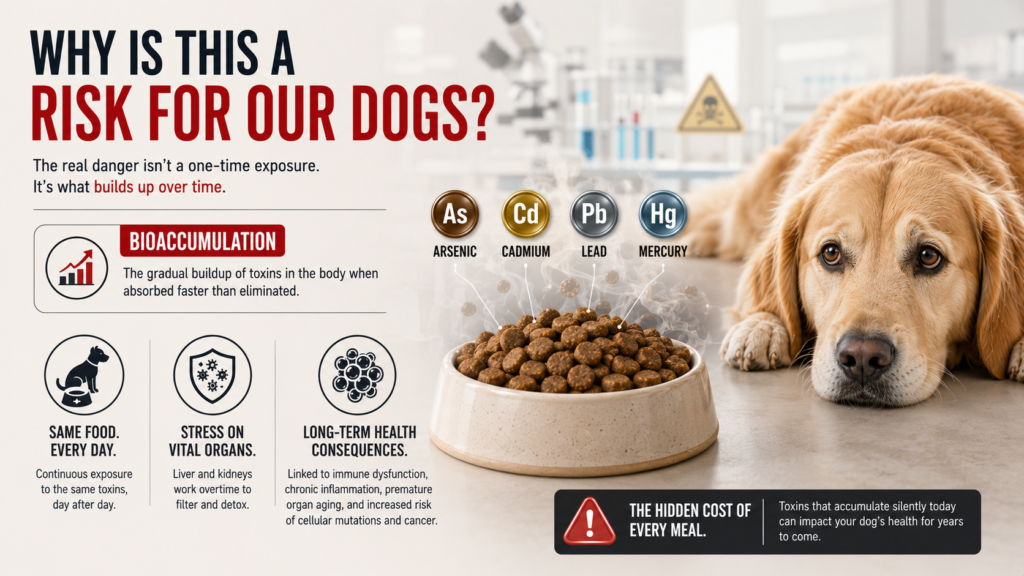
Bioaccumulation refers to the gradual buildup of substances, such as heavy metals or chemicals, in an organism over time. This occurs when an organism absorbs a toxic substance at a rate faster than that at which the substance is lost or eliminated.
Consider the modern feeding model for dogs: they are routinely fed the exact same highly processed, dry food, from the exact same manufacturer, twice a day, every day, for their entire lives. Unlike humans who eat a highly varied diet—which naturally limits the repeated exposure to any one specific environmental contaminant—dogs on a strict, unvarying kibble diet face continuous, chronic exposure to the exact same contaminant profile day in and day out.
Over months and years, these trace heavy metals bioaccumulate. The liver and kidneys, which act as the body’s primary waste filtration systems, bear the brunt of the stress. Over time, chronic heavy metal and plasticizer exposure has been scientifically linked to immune system dysfunction, chronic systemic inflammation, premature organ aging, and an increased risk of cellular mutations and cancer.
The Silver Lining: The Benefits of Natural, Minimally Processed Foods
The Clean Label Project’s data was not entirely negative. In fact, it provided a powerful, data-backed endorsement for the benefits of natural canine nutrition.
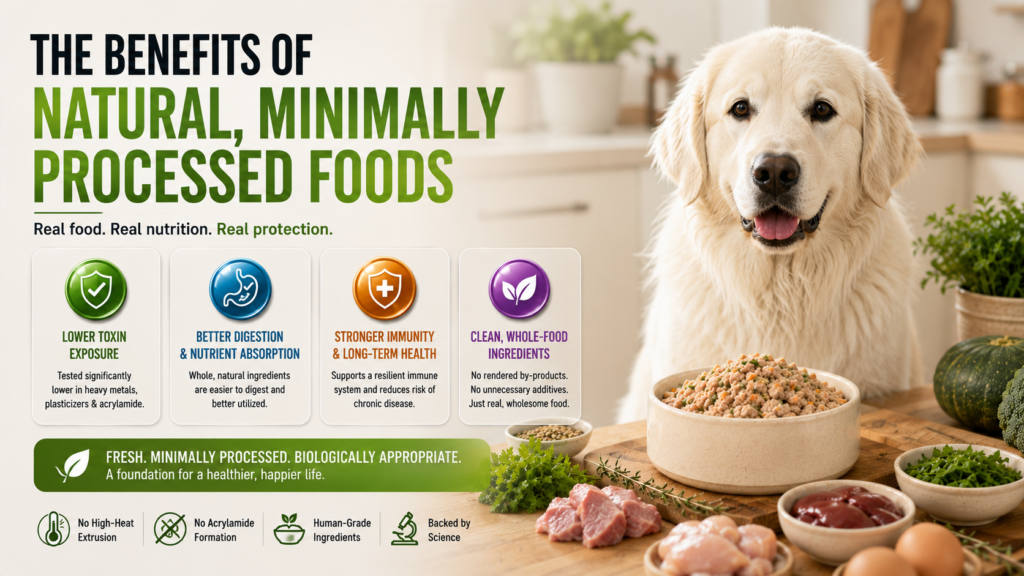
The analytical results clearly demonstrated that fresh, frozen, and minimally processed diets tested significantly lower for heavy metals, chemical plasticizers, and acrylamide. Without the need for extreme high-heat extrusion, acrylamide formation is entirely bypassed. Furthermore, diets that rely on human-grade, whole-food ingredients rather than rendered, condensed by-product meals naturally avoid the extreme concentration of heavy metals found in commercial bone meals.
This data supports what holistic practitioners and natural nutrition advocates have been emphasizing for years: moving away from highly processed, shelf-stable convenience foods and toward biologically appropriate, fresh, natural ingredients offers profound preventative health benefits for our pets.
Actionable Steps for Pet Parents
Understanding the science behind pet food manufacturing is only the first step. The ultimate goal is applying this knowledge to improve your dog’s daily wellness. You do not need to panic or completely overhaul your life overnight. Here are highly effective, rational steps you can take to minimize your dog’s toxic load.
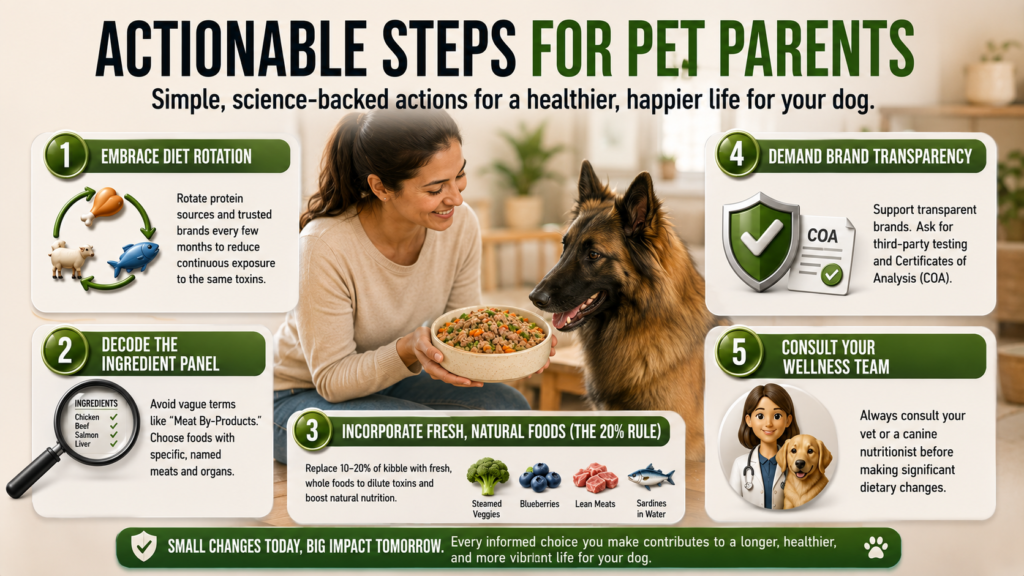
1. Embrace Diet Rotation The simplest way to combat the dangers of bioaccumulation is to stop feeding the exact same bag of food indefinitely. If your dog is healthy and does not have a sensitive stomach, practice rotational feeding. Switch between different protein sources (e.g., transition from a chicken recipe to a lamb recipe) and rotate between a few highly trusted, high-quality brands every few months. This prevents your dog from being subjected to the exact same trace contaminant profile every single day of their life.
2. Decode the Ingredient Panel Become an analytical reader of pet food labels. Avoid foods that list vague, unnamed ingredients such as “Meat By-Products,” “Poultry Meal,” or “Animal Fat.” Because these ingredients are rendered from unknown, varied sources, they carry a much higher risk of heavy metal concentration. Instead, look for specifically named meats (like “Chicken,” “Beef,” or “Salmon”) and named organs.
3. Incorporate Fresh, Natural Foods (The 20% Rule) You do not have to switch to a 100% fresh or raw food diet if it is not currently accessible or financially viable for your household. You can make a massive impact through dilution. By replacing 10% to 20% of your dog’s daily kibble allotment with pet-safe, fresh, natural foods, you are directly reducing their daily toxic load and boosting their intake of natural antioxidants. Excellent, budget-friendly additions include:
- Lightly steamed cruciferous vegetables (like broccoli or cauliflower), which support liver detoxification.
- Fresh blueberries, packed with antioxidants to combat cellular damage.
- Lean, gently cooked or safely sourced raw whole meats.
- Sardines in water, offering clean Omega-3 fatty acids without the heavy metal risks associated with larger predatory fish.
4. Demand Brand Transparency Vote with your wallet. Support pet food brands that prioritize transparency and quality control. Do not be afraid to email your dog food manufacturer and ask if they conduct third-party batch testing for heavy metals and contaminants. Brands that are confident in their supply chain and manufacturing processes will readily share this analytical data or their Certificates of Analysis (COA) with consumers.
5. Consult Your Wellness Team Always remember to consult your veterinarian or a certified canine nutritionist before making significant dietary changes, especially if your dog has existing health conditions, such as kidney disease or liver compromise, where specialized dietary parameters are required.
Conclusion
The evolution of the pet industry brings with it a wealth of new data, and while reports like the Clean Label Project’s findings can initially seem daunting, they are ultimately tools for empowerment. By understanding the mechanisms of high-heat extrusion, bioaccumulation, and ingredient sourcing, you are no longer blindly trusting the front of a colorful dog food bag. You are now equipped to look rationally at what goes into the bowl.
At edupet.in, our mission is to cut through the marketing noise and provide unbiased, science-backed education that elevates the standard of care for pets across India. By making small, informed adjustments—whether that means rotating diets, reading labels more critically, or introducing fresh, natural whole foods to the bowl—you are actively investing in your dog’s longevity and vitality.
The information provided in this article by Edupet is for educational and informational purposes only and does not constitute professional veterinary advice, diagnosis, or treatment. The data and findings discussed regarding heavy metals and contaminants in dog food are based on independent, third-party research conducted by the Clean Label Project. Edupet does not claim ownership of this study, nor do we independently verify its laboratory results. This content is intended to foster awareness and encourage informed discussions about canine nutrition, not to defame, disparage, or target any specific commercial pet food brand or manufacturer.
About The Author